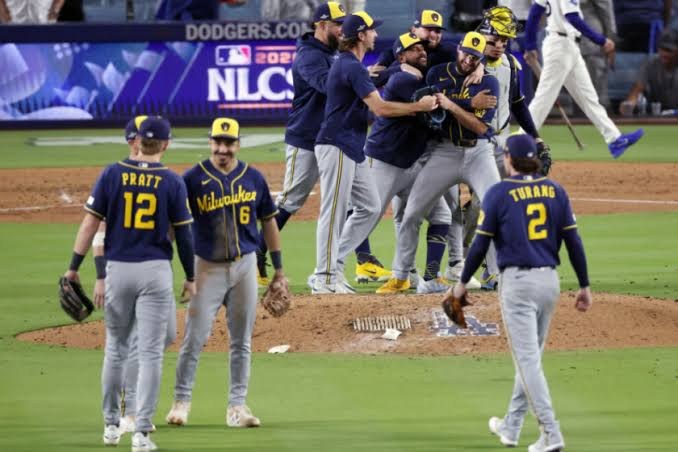
The Brewers Lead the Dodgers 3–0, and Los Angeles Has Mostly Itself to Blame
Milwaukee is one win from its first World Series trip in 44 years. The Brewers have played well, but the Dodgers have made it easy.
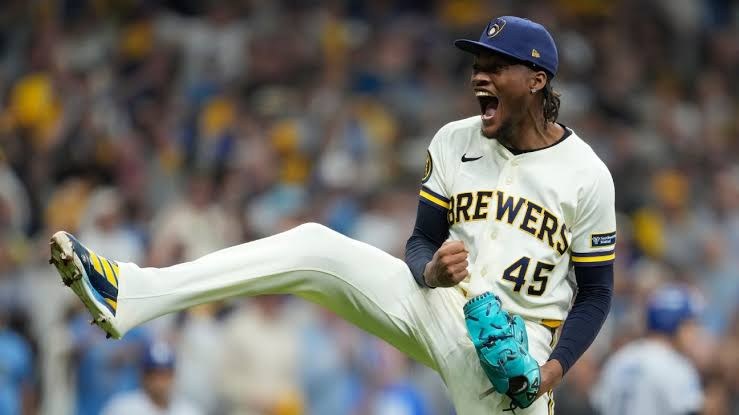
The Brewers won the first three games of the NLCS, 2–1, 7–4 and 6–2. Only one team in baseball history has come back from a 3–0 deficit in a best-of-seven series: the 2004 Red Sox. Game 4 is tonight at Dodger Stadium.
By the numbers
3–0
Brewers' series lead
0.31
Brewers bullpen ERA through the first six games of the postseason
.150
Shohei Ohtani's average through the first six postseason games
1 in 42
Teams that came back after falling behind 3–0 in a best-of-seven
Game 1: Brewers 2, Dodgers 1
Brice Turang homered off Tarik Skubal, and Milwaukee's bullpen shut the Dodgers down after Jacob Misiorowski's short outing. The Brewers had lost seven straight postseason games to Los Angeles, including last year's NLCS sweep. Luis Lara's fifth-inning RBI single put Milwaukee ahead for good.
The game turned on defense and relievers. DL Hall replaced Misiorowski with a runner aboard and got Freddie Freeman to ground into a double play. Turang was at the center of three key double plays. Aaron Ashby then retired Freeman, Ohtani and Teoscar Hernández in the eighth, and Trevor Megill closed it out.
Game 2: Brewers 7, Dodgers 4
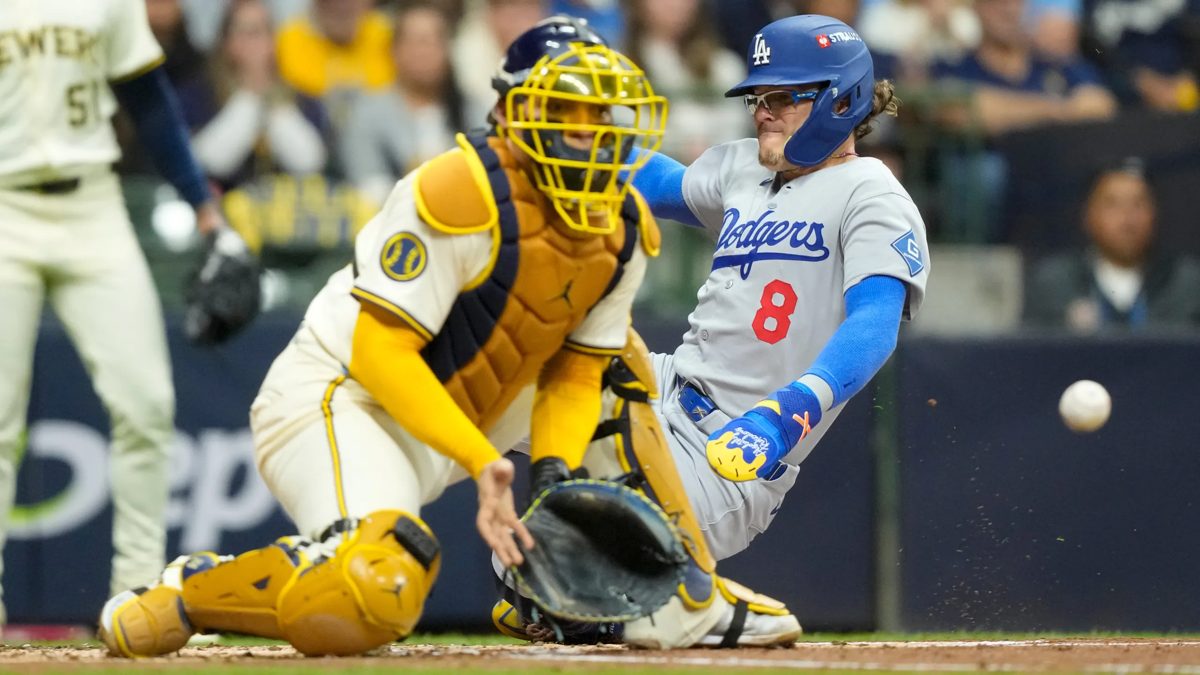
William Contreras hit a tying homer in the fifth and singled home the go-ahead run an inning later. The Dodgers led three times in the first five innings and still lost. Four Brewers relievers then retired the last 15 Dodgers hitters in order.
Yoshinobu Yamamoto's start set the tone. He lasted just 2⅔ innings, the shortest postseason start of his career, and left with the Dodgers behind 3–2 after Christian Yelich's two-run single. His third inning took 36 pitches, and a 12-pitch walk to Jake Bauers that loaded the bases was the turning point. This is a pitcher who went 14–9 with a 2.53 ERA this season. A year ago on the same mound, he threw a complete game against these Brewers. This time he never got out of the third.
Ohtani went 0-for-4 with two strikeouts.
Game 3: Brewers 6, Dodgers 2
Jackson Chourio hit Blake Snell's first pitch of the game over the right-field wall. Will Smith's two-run double gave the Dodgers a 2–1 lead in the sixth.
Then the seventh happened. Jake Bauers worked an 11-pitch at-bat against Snell and homered to put Milwaukee ahead 3–2, and Garrett Mitchell followed with another homer. The Dodgers had won 18 straight postseason games when leading after six innings, and that streak ended. The Brewers added a run in the eighth and another in the ninth.
Snell became the second pitcher in MLB history to give up a home run on both the first and last pitch he threw in a postseason start. John Smoltz was the first, in the 1991 NLCS. Snell gave up three homers after not allowing any during the regular season.
| Team | 1 | 2 | 3 | 4 | 5 | 6 | 7 | 8 | 9 | R |
|---|---|---|---|---|---|---|---|---|---|---|
| Brewers | 1 | 0 | 0 | 0 | 0 | 0 | 3 | 1 | 1 | 6 |
| Dodgers | 0 | 0 | 0 | 0 | 0 | 2 | 0 | 0 | 0 | 2 |
A team that keeps beating itself
Yamamoto and Ohtani are the names people are talking about, but the problem is bigger than either of them. Nearly every good moment Milwaukee has had, the Dodgers helped create.
Game 1: They hit into three double plays (Freeman, Hernández and Smith) and left nine runners on base. That's a lot of damage to do to yourself in a one-run game.
Game 2: The ace couldn't get through the third, and the bullpen gave up the go-ahead run in the sixth and two more in the eighth.
Game 3: The Dodgers went 1-for-6 with runners in scoring position. Manager Dave Roberts also made lineup moves that backfired. Max Muncy pinch-hit for Andy Pages and struck out, and Kiké Hernández pinch-hit for Josue De Paula and struck out too. Then Snell stayed in for the seventh after retiring 14 in a row, and Bauers and Mitchell hit back-to-back homers.
Muncy was blunt afterward. He said LA's offense was playing badly and Milwaukee was playing great. Honestly, that's hard to argue with.
Ohtani's postseason
Ohtani was hitting .150 over the first six postseason games and got dropped to sixth in the order for Game 3, the lowest he's batted since joining the Dodgers. He has no extra-base hits this postseason and hasn't homered since August 18. He's also been dealing with knee and biceps injuries, though he said they shouldn't be the reason he can't hit.
In Game 3 he had a hit and a walk, which is a start, but it's a long way from last year, when he hit three home runs and struck out 10 as a pitcher in the NLCS clincher against this same team.
The economics of it all
Outs are a budget. Think of a baseball game as a budget, and outs are what you're spending. A team gets 27 of them, and a double play burns two at once. Three Dodgers double plays in Game 1 meant three extra outs thrown away in a one-run game. Efficiency in baseball is about not wasting outs, and the Dodgers wasted them.
Payroll doesn't win series. The Brewers are proof. Milwaukee's payroll is less than half of Los Angeles's. This is Moneyball all over again: depth, defense and bullpen usage beating a roster built on star power.
The bullpen is the real efficiency story. Through the first six games, Milwaukee's bullpen had a 0.31 ERA, the best of the wild-card era and second in postseason history only to the 1991 Twins. Spreading innings across many arms means no single pitcher gets overused, and every arm gets a high return on the pitches he throws.
Roberts' decision on Snell is a classic marginal-value problem. The next batter matters more than the last 14 outs. Past dominance can trick you into ignoring who is actually at the plate.
My unfiltered take
The Brewers are playing well, but this series is also about the Dodgers losing it themselves. Yamamoto's worst postseason start, Ohtani's slump, Snell's three homers and a manager making moves that didn't work all happened in the same three games. The Dodgers aren't getting beaten by one thing, which makes it harder to fix.
Milwaukee has done the simple things right, and it has capitalized every time LA gave it an opening. That's how a team with half the payroll ends up one win from the World Series.
I wouldn't count out a team this talented, but history says it's over. If I'm the Dodgers, I'm asking how a lineup this expensive keeps giving away outs. Right now, I don't see the answer. I'd take the Brewers to finish it, whether that's tonight or this weekend.
Landrey
Never miss a take
Get my takes in your inbox
New articles and my unfiltered takes on baseball, football, golf and Formula 1, sent straight to your email.
No spam. Unsubscribe anytime. Privacy policy